Is the Nazca Lines Flight Worth It? Flight Time and FAQs
You find yourself standing on a dusty patch of desert outside a tiny terminal in southern Peru, listening to twin-prop engines scream as the wind whips gravel against your ankles. It is hot, your stomach feels strange from the early morning bus, and you are clutching a boarding pass wondering if a nazca lines flight worth it choice was the right move for your trip budget. The ticket is not cheap. In a country where you can eat an incredible three-course lunch for four dollars, dropping a hundred bucks or more on thirty-five minutes in the air is a major investment.
The short answer is yes, but only if you know what you are signing up for. People step off these six-seater Cessnas either beaming with awe or pale green, stumbling straight toward the restroom with a sick bag in hand. Between motion sickness, weather delays, and the challenge of spotting ancient figures etched into sun-baked gravel, the experience varies wildly from traveler to traveler. Here is an honest breakdown of the flight time, the logistics, the history, and whether you should bother booking one.
Book your nazca lines flight experience:
Nazca Lines Flight Time and Route Options
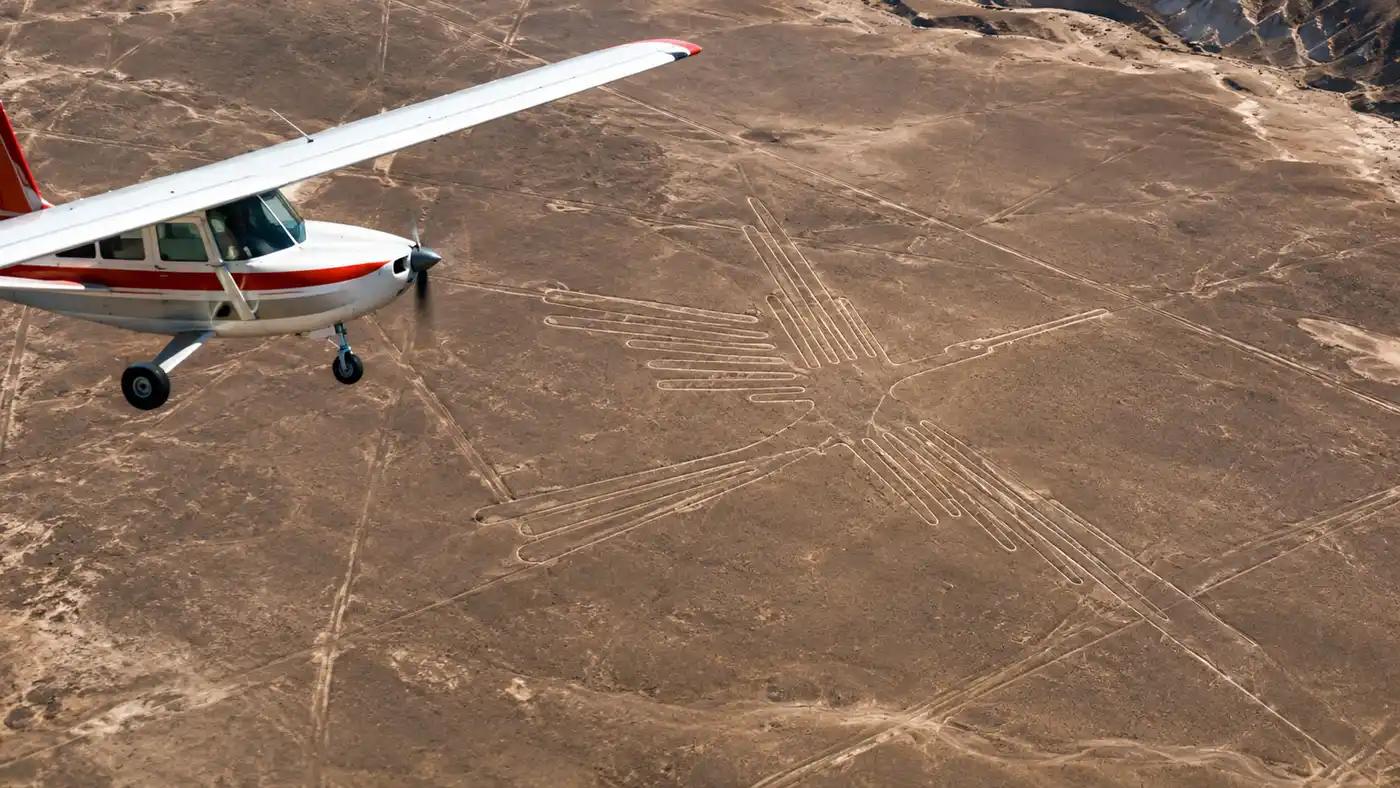
Most travelers book the standard circuit out of Maria Reiche Neuman Airport. The typical nazca lines flight time is between 30 and 35 minutes from takeoff to landing, during which your pilot covers twelve to fourteen classic geoglyphs. You will see the Hummingbird, the Monkey, the Spider, the Condor, the Astronaut, and several sprawling geometric trapezoids.
A question travelers constantly ask is: is 35 minutes flight enough to see the nazca lines? Honestly, thirty-five minutes feels plenty long when you are in the air. The plane does not fly in a straight, gentle path. To let passengers on both sides of the aircraft snap clear photos, the pilot banks sharply to the left, circles each geoglyph, straightens out for ten seconds, and then banks violently to the right for the folks on the other side. By minute twenty-four, your inner ear is working overtime, and almost everyone is ready for solid ground.
If you want a deeper look, operators also run a combined nazca and palpa lines flight that stretches closer to 55 or 60 minutes. Palpa lines are actually older than the Nazca figures, dating back to the Paracas culture, and they feature human figures, family groups, and complex warriors carved into hillsides rather than flat plains. It is a stunning route, but you need an iron stomach to endure an hour of continuous low-altitude banking turns over desert thermal currents.
| Flight Type | Duration | Key Highlights | Motion Sickness Risk | Average Cost |
|---|---|---|---|---|
| Classic Nazca Circuit | 30-35 mins | 12-14 classic figures (Monkey, Spider, Hummingbird) | Moderate to High | $80 - $110 |
| Nazca & Palpa Combined | 55-60 mins | All classic Nazca figures plus human Paracas geoglyphs | Very High | $160 - $210 |
| Ground Mirador Tower | 0 mins (ground) | Partial view of The Hands and The Tree only | Zero | $1.50 |
Ticket costs fluctuate based on the season and whether you take a nazca lines flight from nazca itself or fly from further away in Pisco. If you are comparing budgets, check out our breakdown on Nazca Lines flight costs and fees to avoid airport tax surprises on the morning of your trip.
Pro tip: Request the morning slots between 7:30 AM and 9:30 AM. Desert thermals kick up after 11:00 AM, creating fierce turbulence that turns mild turbulence into a stomach-churning roller coaster.
What It Actually Feels Like in the Air
Nobody warns you about the headset. The engines on these little Cessnas are loud, a relentless, rattling drone that vibrates right through your ribcage. You put on bulky aviation headphones so the co-pilot can guide your eyes: "Look to the left wing tip, left wing tip, see the tail of the monkey!"
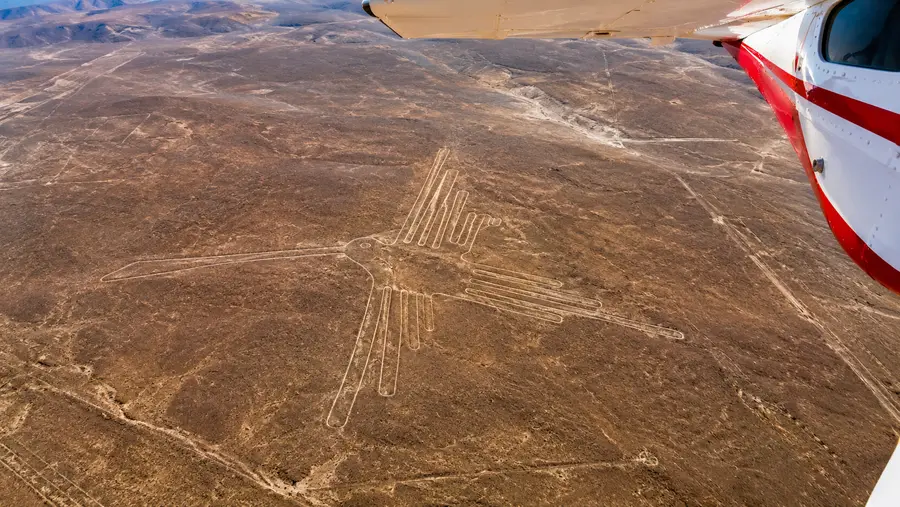
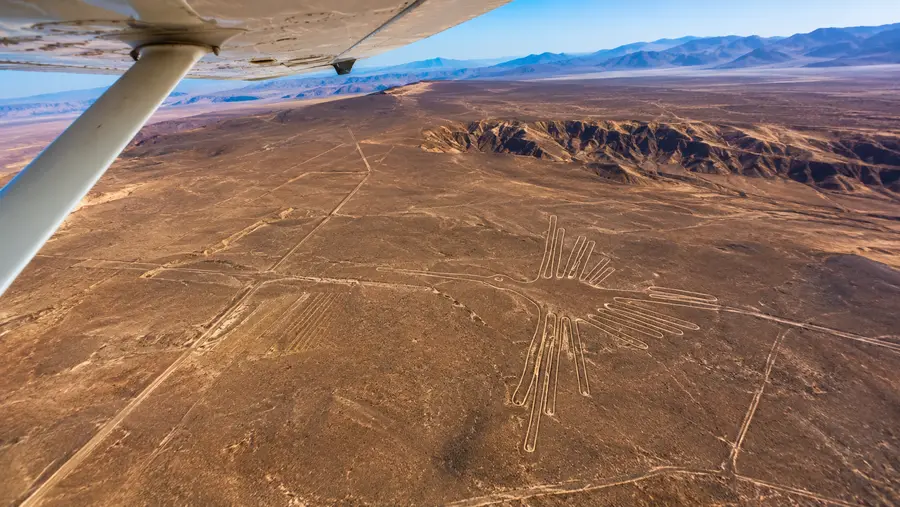
Finding the figures is harder than travel documentaries make it look. The geoglyphs are not deep trenches filled with bright white sand. They are shallow indentations where ancient people removed the oxidized, reddish-brown surface pebbles to reveal the lighter grayish soil underneath. In bright midday sun, the glare can wash them out completely. You will strain your eyes through the scratched acrylic window, frantically adjusting your camera focus while your pilot banks forty-five degrees toward the earth.
Trying to record a smooth nazca lines flight video is nearly impossible with a heavy DSLR unless you have professional stabilizing gear. Phone video often ends up jittery, tilting back and forth as the plane snaps into hard turns. Most seasoned travelers say it is better to take quick burst photos when the plane levels off, and spend the remaining seconds just looking with your own eyes. Otherwise, you spend $100 looking at a 5-inch phone screen while hovering over one of the greatest archaeological wonders on Earth.
Safety is obviously on everyone's mind given the rough reputation Peruvian regional aviation had fifteen years ago. Stricter oversight, mandatory twin-pilot rules, and rigorous maintenance requirements have made a huge difference. You can read more about current airline regulations and historical safety records in our guide on Nazca Lines flight safety.
Why Were the Nazca Lines Made Without Flight?
Standing on the desert floor, you cannot perceive the shapes at all. They just look like ancient dirt roads or cleared footpaths stretching out toward the horizon. That simple fact has driven decades of wild alien theories and pseudo-scientific speculation.
The reality uncovered by archaeologists tells a much more human story. The nazca lines flight history began somewhere between 500 BC and 500 AD, created by the Paracas and Nazca cultures. These groups constructed elaborate geometric outlines using simple wooden stakes and rope grids to scale up smaller drawings onto the desert floor. When researchers examined the terrain, they found ancient wooden posts still embedded in the ground, carbon-dated straight to the Nazca period.
So why were the nazca lines made without flight? They were not meant to be airport runways or signals to the sky gods in a comic-book sense. They were ceremonial pathways. Nazca priests and community members walked along the single, unbroken lines during sacred rituals, praying for rain and water in one of the driest deserts in South America. Offerings of broken ceramic vessels, sea shells from the coast, and plant remains have been unearthed directly inside the lines. The figures were large because they were processional routes, walking labyrinths designed for community worship under an open sky.
Book your nazca lines flight experience:
Can You Experience Peru Nazca Lines Without Flight?
If you have debilitating vertigo, severe inner-ear issues, or an ultra-lean shoestring budget, boarding a light aircraft might simply be out of the question. You can explore the peru nazca lines without flight, but you must keep your expectations realistic.
The Pan-American Highway cuts straight through the heart of the Nazca pampa. In fact, when the highway was paved in the 1930s, the road builders plowed right through the tail of the Lizard geoglyph because nobody on the ground realized what it was. Right beside the road sits the Mirador de las Lineas de Nazca, a metal observation tower roughly forty feet high.
- The Observation Tower (El Mirador): You pay about five soles (around $1.30) to climb steep metal steps. From the top platform, you can clearly see two figures: The Tree and The Hands. Because you are only forty feet up, you view them at a flat, oblique angle rather than a bird's-eye perspective.
- The Palpa Viewing Towers: Located twenty minutes further north along the highway, these platforms let you view the Paracas family figures carved onto nearby hillsides, which are naturally easier to see from ground level than flat figures.
- Maria Reiche Planetarium and Museum: Located at the Hotel Nazca Lines and Reiche's former home in San Jose, these spots explain the mathematics, astronomy, and preservation history without setting foot near an engine.
- Cantalloc Aqueducts: Ancient spiral stone filtration channels built by the same Nazca civilization, easily reached via taxi from the town center for a few soles.
Ground viewing gives you a neat appreciation for the scale of the soil movement, but it cannot match the sudden revelation of looking down from 1,500 feet and seeing an 800-foot hummingbird materialize out of the dry crust of the earth.
Note: Walking onto the lines from the road is strictly prohibited and carries massive criminal penalties. The fragile desert crust takes thousands of years to heal if stepped on outside marked visitor paths.
Logistics: Delays, Operations, and Airport Realities
Booking your ticket is straightforward, but flight operations in Nazca run on desert time. The small terminal at Maria Reiche Airport can be chaotic during peak travel months from June through September.
The most frustrating reality is a nazca lines flight delayed by morning fog or sudden winds known locally as paracas. Cool air from the Pacific ocean rolls across the coastal range during the night, settling over the desert basin as thick, milky white fog. Small planes cannot fly under visual flight rules until the sun burns off the layer, which sometimes does not happen until 9:30 or 10:00 AM. If morning flights get pushed back, the entire day's schedule cascades into long terminal waits.
When you book flights from nazca lines operators, you are assigned a general flight window rather than a guaranteed departure minute. Weight distribution is strictly monitored. Every passenger must step onto a scale with their daypack at check-in, and the ground crew assigns seats purely based on weight balancing rather than couple or family preferences.
- Arrive early: Get to the airport at least an hour before your scheduled window to clear security and the municipal tax kiosk.
- Carry your original passport: Ground staff will not let you board with a photo or digital copy on your phone.
- Skip the heavy breakfast: Drink water, skip the dairy and greasy eggs, and take dimenhydrinate (Dramamine) at least 45 minutes before stepping onto the tarmac.
- Dress in removable layers: The terminal can feel chilly in the desert morning, but the small plane cabin warms up quickly in the sun.
Frequently Asked Questions about nazca lines flight worth it
Will I get sick during the flight?
Around a third of passengers experience noticeable nausea, and at least one person in every few flights uses the sick bag. Small planes tilt repeatedly from side to side so both sides can see the figures. Taking an anti-nausea pill an hour before flying and keeping your eyes fixed on the horizon between figures helps significantly.
How long is the actual time in the air?
The standard flight covers 30 to 35 minutes in the air. The Palpa circuit extends the route to about 55 or 60 minutes. Expect to spend an additional two hours on the ground for check-in, weigh-ins, and waiting for air traffic clearance.
What is the best time of day to fly?
Early morning flights between 7:30 AM and 10:00 AM generally offer the smoothest air before the desert heats up. However, coastal fog can occasionally delay early departures, so flexibility in your morning schedule is helpful.
Can children take the flight?
Yes, children can fly, but most operators require infants to sit on a parent's lap while kids over two have their own seat. Very young children often struggle with ear pressure from the rapid altitude shifts and the heavy engine noise.
Is seeing the lines from the highway tower enough?
The highway tower gives you a quick glimpse of two figures, but it does not convey the immense scope or mystery of the pampa. If your budget and stomach allow it, the flight provides an entirely different, vastly superior experience.
Quick Reference
- Standard flight duration: 30-35 minutes
- Average ticket cost: $80 to $110 plus airport tax
- Weight check: Mandatory at terminal check-in
- Best flight window: 7:30 AM to 10:00 AM
- Ground alternative: Mirador tower ($1.30, 2 figures visible)
Book your nazca lines flight experience:
My Take
If you are traveling through southern Peru, the Nazca Lines flight is one of those rare travel experiences that cannot be replicated anywhere else on the planet. Yes, the terminal waiting is annoying, your flight might get held up by an hour of desert fog, and your stomach might feel unsteady for the rest of the afternoon. But the moment the pilot banks over the ridge and that 300-foot Spider appears out of nowhere against the silent, barren gravel, the hassle disappears. Take a motion sickness pill, keep your camera on your lap for half the ride, and go see them from the sky.
Read more about nazca lines flight.